Dark skies: Where to see meteor showers
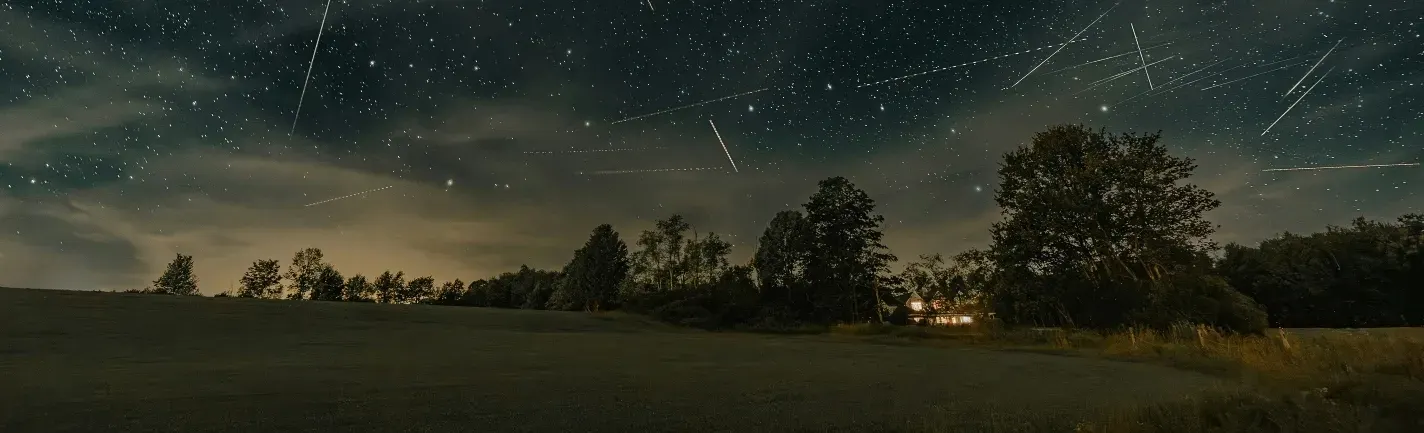
With longer nights approaching, astronomical activity across the northern hemisphere will soon be reaching its peak.
Major meteor showers such as the Orionids, Taurids, Leonids, and Geminids will be visible throughout the UK and Europe during the colder months, creating some spectacular displays across our skies. However, seeing these rare showers requires not only clear weather but also low light pollution.

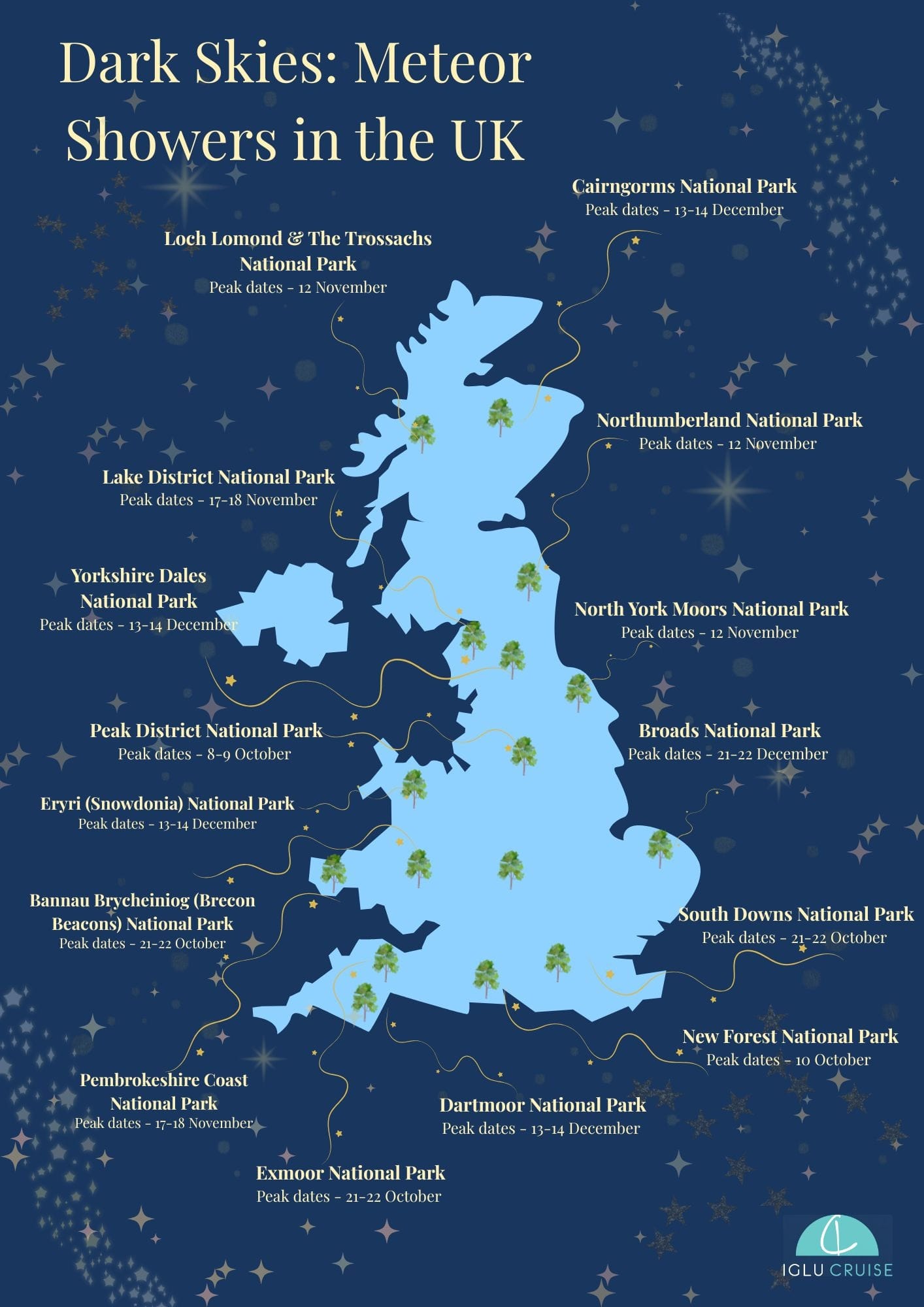
With that said, we have created the Dark Skies Guide to viewing the best meteor showers coming up this year. For every National Park in the UK, we have identified which meteor showers you can see and the best dates to see them.
Key information:
What does Bortle Class mean? A Bortle class is a numeric rating, ranked from 1 to 9, that measures how bright a night sky is at a specific location due to light pollution. Lower numbers mean skies with little light pollution, whilst higher numbers indicate more light pollution.
Can you only see meteor showers on the peak dates? No, you can see active meteor showers around their peak dates, but the peak dates are the maximum activity.
Why are the names different for meteor showers? Meteor showers are named after the constellation or bright star where their shooting stars appear to originate. For example, Geminids come from the constellation Gemini, Orionids from Orion, etc.
England
Broads National Park
Bortle Class 4
Ursid meteor shower - Sparse showers
Peak dates - 21-22 December
Ursids stream from the northern sky near the constellation Ursa Minor, also known as the Little Bear. Norfolk's low and flat coastal horizons offer unobstructed views of faint circumpolar meteors.
Dartmoor National Park
Bortle Class 3
Geminid meteor shower - Plenty of bright meteors, few trains
Peak dates - 13-14 December
The Geminids hit peak activity around midnight. Dartmoor National Park offers elevated 360-degree views of the night sky, while large granite rocks serve as natural windbreaks during cold December nights, making for perfect meteor viewing conditions.
Exmoor National Park
Bortle Class 3
Orionid meteor shower - Fast with fine trains
Peak dates - 21-22 October
Orionids move from the south and southeast. Exmoor National Park’s high elevation, at places such as Dunkery Beacon, provides clear views across without urban light pollution.
Lake District National Park
Bortle Class 3
Leonid meteor shower - Fast bright meteors with fine trains
Peak dates - 17-18 November
Leonid meteor showers are known for fast, bright meteors with persistent trains. Stargazing over remote lakes, such as Windermere and Ennerdale, offers amazing effects as the showers reflect off the water.
New Forest National Park
Bortle Class 4
Southern Taurid meteor shower - Very slow meteors
Peak dates - 10 October
New Forest National Park’s open moorland, such as Wilverley Plain, provides clear, dark southern views away from coastal towns.
North York Moors National Park
Bortle Class 4
Northern Taurid meteor shower - Very slow meteors
Peak dates - 12 November
Northern Taurids produce low-frequency but high-impact meteors. Coastal cliffs around Sutton Bank or Robin Hood's Bay overlook the dark sea, making for excellent meteor conditions.
Northumberland National Park
Bortle Class 3
Northern Taurid meteor shower - Very slow meteors
Peak dates - 12 November
Northumberland National Park’s limited light pollution provides the conditions needed to catch slow-moving Taurid meteors.
Peak District National Park
Bortle Class 4
Draconid meteor shower - Slow-moving meteors
Peak dates - 8-9 October
Unlike most showers, the Draconid radiant is highest in the early evening. The Peak District is a great place to observe Draconid meteors because it has designated Dark Skies Sites, specific areas protected from light pollution, with wide, open horizons.
South Downs National Park
Bortle Class 4
Orionid meteor shower - Fast with fine trains
Peak dates - 21-22 October
South Downs National Park has International Dark Sky Reserve status. Areas like Devil's Dyke face away from London's light pollution, ideal for Orionid tracking.
Yorkshire Dales National Park
Bortle Class 4
Geminid meteor shower - Plenty of bright meteors, few trains
Peak dates - 13-14 December
The Geminids are 2026's strongest shower, with up to 120+ meteors an hour. The Dales' vast, open highlands offer perfect conditions to witness the spectacular sight.
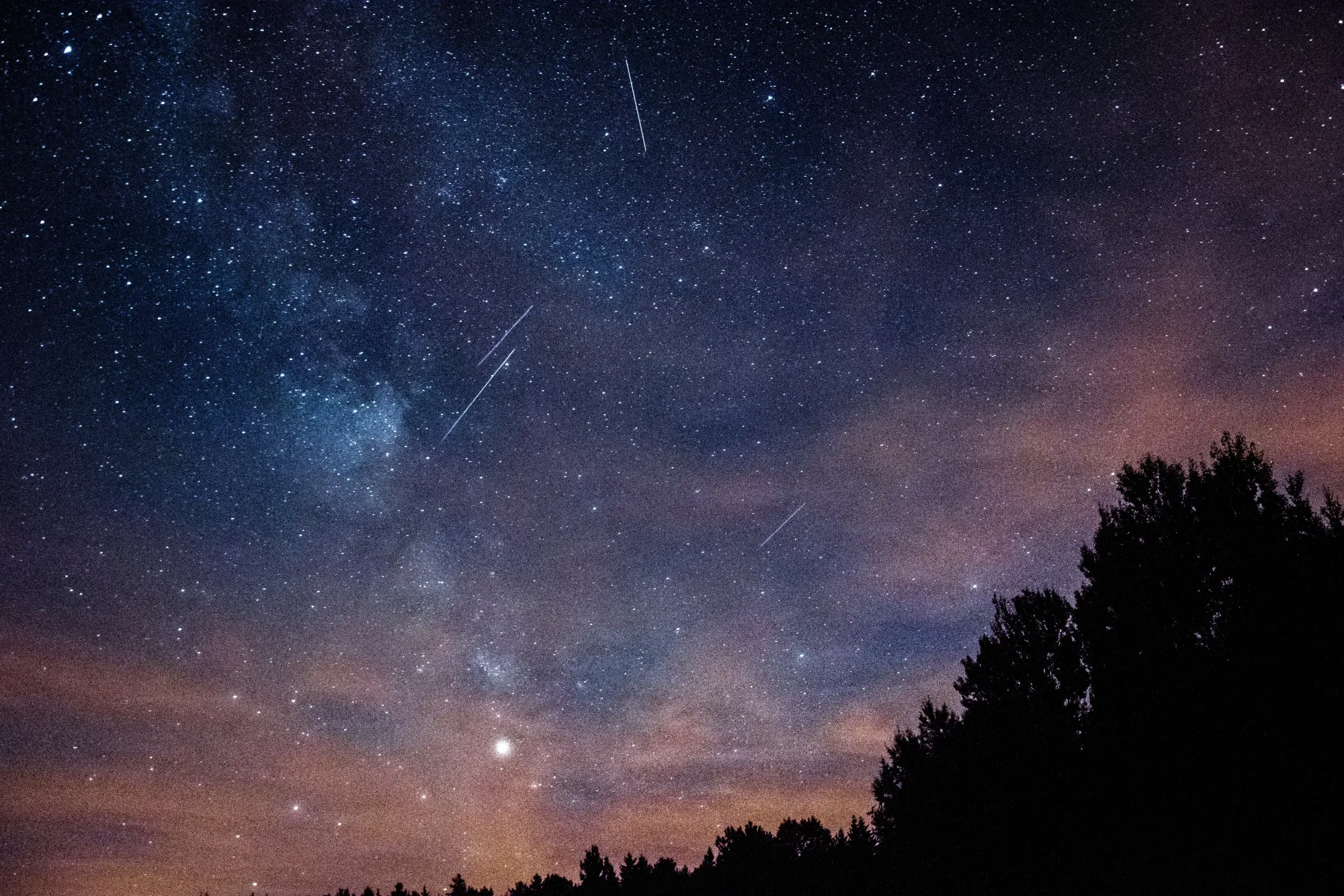
Scotland
Cairngorms National Park
Bortle Class 2
Geminid meteor shower - Plenty of bright meteors, few trains
Peak dates - 13-14 December
The UK's northernmost national park experiences long winter darkness. Combined with a setting crescent moon, conditions offer peak clarity for Geminid streams.
Loch Lomond & The Trossachs National Park
Bortle Class 4
Northern Taurid meteor shower - Very slow meteors
Peak dates - 12 November
Viewing from the northern shores, looking south over Loch Lomond, may reveal bright Taurid meteors shooting across the water.
Wales
Bannau Brycheiniog (Brecon Beacons) National Park
Bortle Class 4
Orionid meteor shower - Fast with fine trains
Peak dates - 21-22 October
Brecon Beacons National Park is a designated Dark Sky Reserve with strict light controls. Areas such as the Usk Reservoir site provide flat terrain for perfect viewing conditions.
Eryri (Snowdonia) National Park
Bortle Class 4
Geminid meteor shower - Plenty of bright meteors, few trains
Peak dates - 13-14 December
Geminid meteor showers require maximum sky exposure. Eryri's deep valleys, such as Llyn y Fan Foel and Ogwen, block peripheral light, framing the sky overhead.
Pembrokeshire Coast National Park
Bortle Class 3
Leonid meteor shower - Fast bright meteors with fine trains
Peak dates - 17-18 November
Coastal headlands such as St Davids Peninsula offer zero light pollution, looking west and south over the Irish Sea, capturing fast Leonid meteors.
Where to see meteor showers in Europe
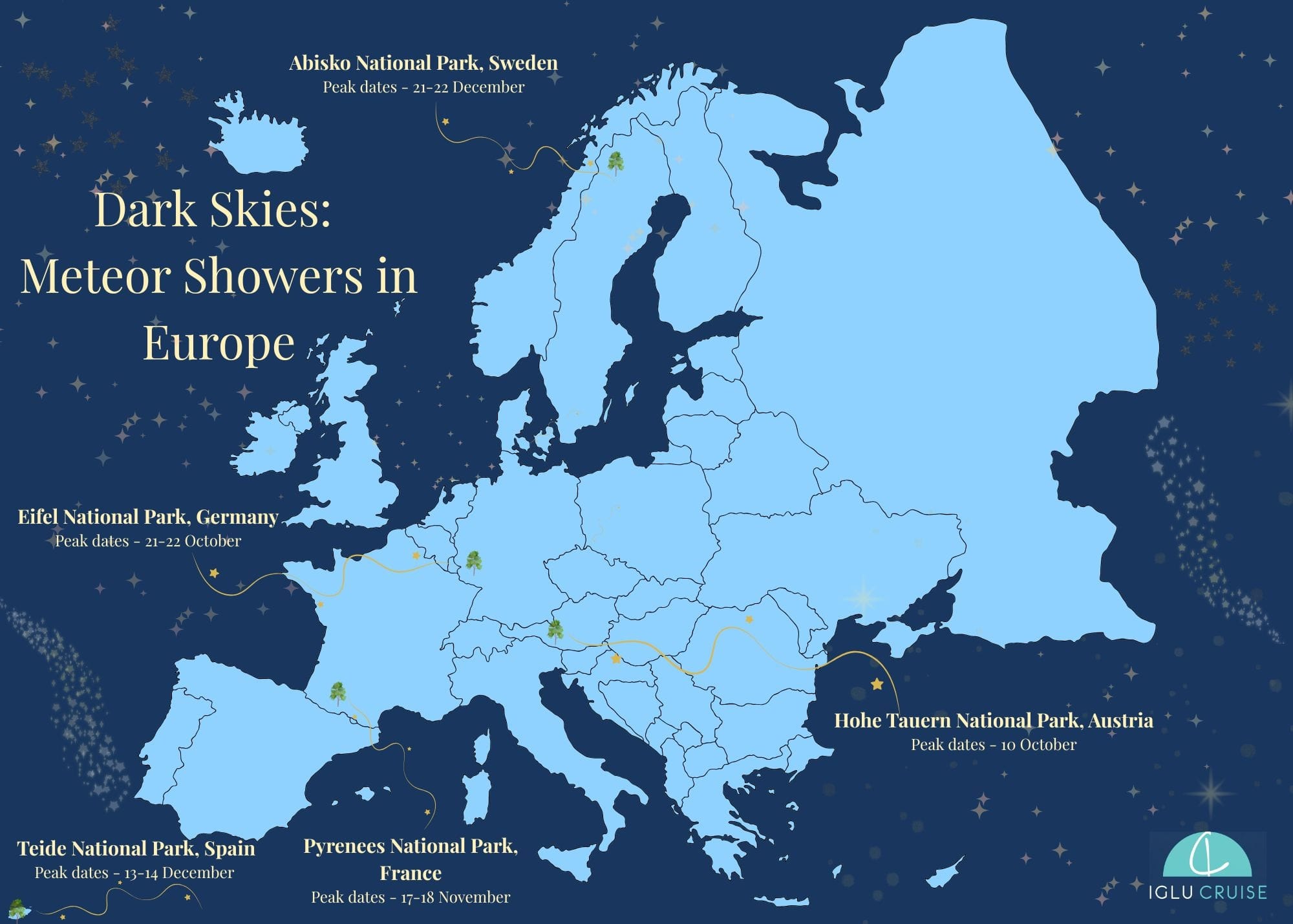
Eifel National Park, Germany
Bortle Class 3
Orionid meteor shower - Fast with fine trains
Peak dates - 21-22 October
Eifel National Park is a certified International Dark Sky Park in North Rhine-Westphalia. Strict lighting regulations and low light pollution offer clear skies ideal for observing Orionid trails over dark lakes.
Pyrenees National Park, France
Bortle Class 3
Leonid meteor shower - Fast bright meteors with fine trains
Peak dates - 17-18 November
The Pyrenees National Park includes the Pic du Midi International Dark Sky Reserve. High mountain elevation delivers extreme clarity for fast Leonid meteors.
Teide National Park, Spain
Bortle Class 2
Geminid meteor shower - Plenty of bright meteors, few trains
Peak dates - 13-14 December
Teide National Park has a Starlight Reserve status. Situated high above cloud inversion layers on Tenerife, the subtropical latitude and high altitude provide dark winter skies for peak Geminid showers.
Abisko National Park, Sweden
Bortle Class 1
Ursid meteor shower - Sparse shower2
Peak dates - 21-22 December
With the lowest Bortle class possible, Abisko National Park lies deep within the Arctic Circle. Surrounding mountains create exceptionally clear polar skies for circumpolar Ursid observations during the winter solstice.
Hohe Tauern National Park, Austria
Bortle Class 2
Southern Taurid meteor shower - Very slow meteors
Peak dates - 10 October
Hohe Tauern National Park is a Central Alps preserve with clean mountain air and minimal light spill, making slow-moving Southern Taurid meteor trails easy to track across high mountain horizons.
Ready to book your next adventure?
If we’ve inspired you to see the stars, why not consider a cruise? Cruises often have brilliant views of the night sky and star constellations due to low light pollution when sailing across the seas. We have plenty of itineraries throughout the year, including cruises from Southampton, Mediterranean cruises, and world cruises. Take a look at our latest deals to see what awaits.